



Happy Arhat Ceramic Statue
Happy Arhat (Venerable Xu Bojia) is a ceramic statue created by Liu Zizhen, the first generation master of "clay figurine Liu" in the Tongguan Kiln in Changsha, China, in the 1980s. Renowned for his outstanding ceramic skills and profound understanding of traditional sculpture art, he is known as the "clay figurine Liu" and is one of the important representatives of Chinese ceramic art. Through exquisite craftsmanship and vivid artistic expression, the image of Venerable Xu Boga in Buddhism is presented. In Buddhist culture, Arhat is the sage who reaches the nirvana, while happy Arhat, with his optimistic and open-minded image, conveys the positive spiritual connotation. He is an outstanding representative of the ceramic art of Changsha Tongguan Kiln.

Weird Statues - Bonn Collection Series in the Americas
The bizarre statue in the American Bonn Collection series is an artwork made of clay, characterized by two faces stacked on top of each other. The origin of this statue is unknown. Usually refers to sculptures with strange and fantastical qualities, which may depict mythical creatures, monsters, or supernatural phenomena, often used for decoration or symbolic purposes. This type of statue plays an important role in art and culture, inspiring people's imagination and curiosity to explore the unknown.

Manuel II
Manuel II (November 15, 1889- July 2, 1932), known as the "o Patriota", was the last king of Portugal and the Algarve, reigning from 1908 to 1910 until the establishment of the Portuguese Republic in 1910. He was the second son of King Carlos I and Maria Amelia de Orleans, and he inherited the throne after his father and brother, Crown Prince Louis Philippe, were assassinated.

Jiang Taigong Fishing - Bamboo Root Carving
Jiang Taigong, also known as Taigong Wang, was a famous sage and military strategist in Chinese history, later deified as a deity in Taoism. The story of "Jiang Taigong Fishing" originates from "Fengshen Yanyi", symbolizing wisdom and patience, as well as the philosophical idea of "willing to take the bait". Created by Chinese arts and crafts master Liang Fengzhu in 2014, cleverly utilizing the natural form of bamboo roots to carve the posture of Jiang Taigong fishing and the sparkling water surface, showcasing the exquisite skills of traditional Chinese arts and crafts. It is currently collected at the Liangfengzhu Arts and Crafts Museum in Nanyue, Hengyang, Hunan Province, China. It is praised for its exquisite craftsmanship and profound cultural connotations.

Maria Rosalia Rita de Castro
Maria Rosalia Rita de Castro, better known as Rosalia de Castro, was a 19th-century Galician poet and novelist, considered one of the most important figures in 19th-century Spanish literature and modern lyric poetry. Her poetry works helped inspire the revival of Galician literary language. Rosalia de Castro's poetry is characterized by deep nostalgia, longing, and melancholy. Her poetry explores themes such as women's oppression, seeking liberation, and advocating for women's identity. Her poetry had a huge impact on the eve of the Portuguese Revolution in 1910.

The Thinker
O Pensador "is a work created by Leopoldo de Almeida in 1939, currently housed in the Caldas da Rania Art Center. Leopoldo de Almeida is a Portuguese sculptor whose works have a high reputation both in Portugal and internationally. His works include some very important sculptures, such as' Princess Maratha ',' Monument to Princess Maratha ', and' The Thinker '.

Zhong Kui - Bamboo Root Carving
Zhong Kui, also known as Zhong Kui, is a famous ghost catching hero in Chinese and Japanese mythology. Legend has it that he can drive away demons and lead 80000 ghost soldiers. His image is often painted on the lintel of households as a guardian deity, and is also common in commercial places to protect valuable items. Through the technique of bamboo root carving, the majestic image of Zhong Kui is vividly depicted, reflecting the exquisite skills and cultural connotations of traditional Chinese arts and crafts. It is the inheritance of traditional Chinese culture and folk beliefs. Produced by Chinese arts and crafts master Liang Fengzhu in 2013, it showcases the image of the deity Zhong Kui in traditional Chinese culture. It is currently collected in the Liangfengzhu Arts and Crafts Museum in Nanyue, Hengyang, China.

Prince Enrique
Prince Henrique (1394-1460), also known as Navigator Henrique, was a key figure in the early Portuguese Empire and 15th century European maritime discoveries and expansion. He is considered to be the initiator of the great geographical discoveries in Europe. Enrique was the fourth child of King Jo ã o I and Filippa of Portugal. He encouraged his father to conquer the Muslim port of Ceuta on the North African coast in 1415. He learned about the opportunities provided by the Sahara trade route and was most interested in the expansion of trade between Pope John and Portugal in Christian legends.

Gilhimina Sugia
Guilhermena Suggia (June 27, 1885- July 30, 1950) was a Portuguese cellist. She studied with Pablo Casals in Paris and established an international reputation. She lived in England for many years and received a lot of praise. Sugia was one of the earliest women to make playing the cello her profession. She started learning cello in Portugal at the age of only 5 and graduated from Leipzig Conservatory at 18, later becoming one of the most acclaimed musicians of that era.

Abilio Manuel Guaela Junclo
Ab í lio Manuel Guerra Junqueiro (1850-1923) was a senior civil servant, member of parliament, journalist, writer, and poet in Portugal. His poetry works helped inspire the establishment of the First Portuguese Republic. His poetic works are mainly highly satirical about conservatism, romanticism, and the church, which had a huge impact on the eve of the Portuguese Revolution in 1910. He is considered the most popular poet of his time and the most typical representative of the so-called 'New School'.

Dragon Ball - Bamboo Root Carving
The bamboo root carving artwork created by Chinese arts and crafts master Liang Fengzhu in 1998 was inspired by the "Dragon Jaw Pearl" or Dragon Ball in the ancient Chinese legendary story "Zhuangzi: Qi Wu Lun". This work not only showcases Liang Fengzhu's exquisite carving skills, but also contains profound cultural connotations. Through exquisite bamboo root carving techniques, the form and charm of dragon balls are vividly portrayed. Bamboo root carving is one of the traditional forms of Chinese arts and crafts. Through the skillful carving of artists, artworks with unique beauty and cultural connotations are created. It is currently collected in the Liangfengzhu Arts and Crafts Museum in Nanyue, Hengyang, China.
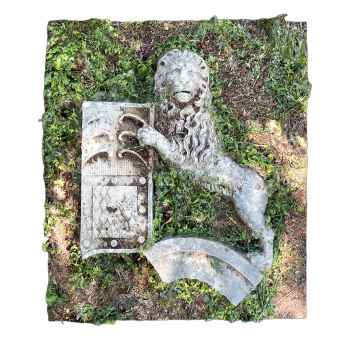
The right half of the damaged lion statue
The Broken Lion Statue is a collection located in the City Museum in Lisbon, Portugal, and is housed in the Pal á cio Pimenta Palace within the museum. Pimenta Palace is an 18th century estate that is now part of the Lisbon City Museum. The long-term exhibitions of this museum reveal the development of Lisbon from prehistoric times to the late 20th century. The collection of this museum includes works of various art forms such as archaeology, painting, drawing, sculpture, and stone carving, depicting the city of Lisbon from prehistoric times to the present day.

Left half of the damaged lion statue
The Broken Lion Statue is a collection located in the City Museum in Lisbon, Portugal, and is housed in the Pal á cio Pimenta Palace within the museum. Pimenta Palace is an 18th century estate that is now part of the Lisbon City Museum. The long-term exhibitions of this museum reveal the development of Lisbon from prehistoric times to the late 20th century. The collection of this museum includes works of various art forms such as archaeology, painting, drawing, sculpture, and stone carving, depicting the city of Lisbon from prehistoric times to the present day.

The Seal
Foca is a commemorative sculpture located at Aqu á rio Vasco da Gama Aquarium in Arges, Lisbon, Portugal. This aquarium is one of the oldest aquariums in the world, built in 1898 to commemorate the 400th anniversary of Vasco da Gama's discovery of the sea route to India. The construction of this aquarium began in December 1897 and ended in July 1898, led by two French master architects, Charles Viald and Fernand Tusette, who were then residing in Lisbon.

Hecate
Hecate is an important Titan goddess in Greek mythology, also known as the "Moon Yin Goddess" or "Black Moon Goddess" symbolizing the night of the dark moon. Hecate is always associated with the waning moon, night, ghosts, underworld, elves, magic, witchcraft, and soul summoning. She is a famous irresistible god of death, an unbeatable or unparalleled queen, and also the guardian goddess of sorcery, spells, and witches. This statue is collected in the Bodaro Pinheiro Ceramic Museum.

Zhang Guolao - Bamboo Root Carving
Zhang Guo is a character in ancient Chinese mythology and is also one of the Eight Immortals of Taoism. In traditional Chinese culture, the Eight Immortals each have their own characteristics, and Zhang Guolao is famous for his longevity and miracles, and is considered one of the real figures in history. The story began around the mid to late 7th century and ended in the mid-8th century. The word 'old' in a name means elder or respectful. Created by Chinese arts and crafts master Liang Fengzhu in 1989, it is now collected at the Liang Fengzhu Arts and Crafts Museum in Nanyue, Hengyang, China. Through exquisite carving techniques, the image depicted showcases Zhang Guolao's demeanor and characteristics, making it vivid and lifelike.

Chiwan Tin Hau Temple Dragon Pillar
The granite dragon pillar of Tianhou Temple in Shekou, Shenzhen. The establishment of Tianhou Temple can be traced back to the Song Dynasty, with a magnificent atmosphere. During the Ming and Qing dynasties, the Chiwan Tianhou Palace was located at the foot of Xiaonan Mountain in Shenzhen, nestled by the mountains and the sea, with beautiful scenery. Its establishment dates back to the Song Dynasty, with a magnificent momentum. It was repaired multiple times during the Ming and Qing dynasties, and its scale grew day by day. It became the most important Tianhou Temple along the coast at that time. Whenever imperial envoys went to Southeast Asian countries, they would stop their ships and offer incense here, praying to the gods for protection with great rituals.

Chiwan Tin Hau Temple Dragon Carving
The granite dragon sculpture at Tianhou Temple in Shekou, Shenzhen. The establishment of Tianhou Temple can be traced back to the Song Dynasty, with a magnificent atmosphere. During the Ming and Qing dynasties, the Chiwan Tianhou Palace was located at the foot of Xiaonan Mountain in Shenzhen, nestled by the mountains and the sea, with beautiful scenery. Its establishment dates back to the Song Dynasty, with a magnificent momentum. It was repaired multiple times during the Ming and Qing dynasties, and its scale grew day by day. It became the most important Tianhou Temple along the coast at that time. Whenever imperial envoys went to Southeast Asian countries, they would stop their ships and offer incense here, praying to the gods for protection with great rituals.
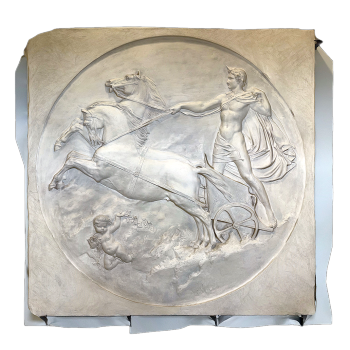
Carlo de Apollo
Carlo de Apollo, created by Ant ó nio Soares Dos Reis (1847-1889), was originally produced in 1870. Currently housed in the National Museum of Soares Dos Reis in Porto. Antonio Soares dos Reis was one of the most important Portuguese sculptors of the late 19th century. His works include some very important sculptures, such as "Exiles" or "Count Ferreira", as well as a set of low reliefs and a travel and annotation album.
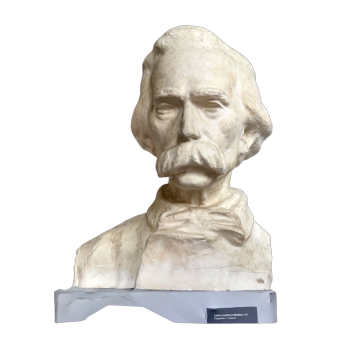
Camillo Castro Blanco
Antonio Duarte (1912-1998) was a Portuguese sculptor belonging to the second generation of modernist artists. His works include some very important sculptures, such as "Camillo Castro Blanco" (1947). This work is made of plaster and is displayed in his named museum, the Antonio Duarte Museum, located in Caldas da Raynia.
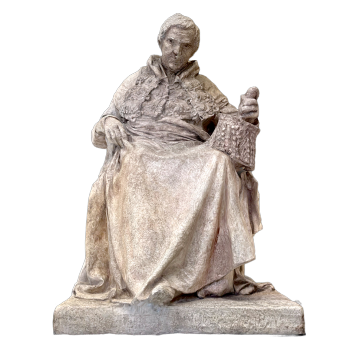
《 Brotolo 》
Antonio Soares dos Reis (1847-1889) was one of the most important Portuguese sculptors of the late 19th century. His works transition from abstract neoclassicism to vivid realism, and he is famous for the "Contemplating Dante" at the Prado Museum and the Columbus Monument in Madrid. The sculpture he created, "Brotolo," is an elderly Felix de Aveira Brotolo, who is a professor at the University of Coimbra. His wrinkled skin and curved posture indicate his old age. He was wearing a long robe, and the 'borla' held in his right hand showed his position as a professor.

The owl statue at the National Library of Greece
The National Library of Greece (Greek: Εθ νικήΒιβ λιοθ ήκη) was established in the first half of the 19th century and is located near the center of Athens. It was designed by Danish architect Theofel Hansen and is one of his neoclassical architectural trilogy (the other two being the Academy of Athens and the University of Athens). The National Library of Greece houses 4500 Greek manuscripts, making it one of the places with the most preserved Greek manuscripts. The museum also houses many documents and archives related to the Greek Revolution.

Confucius bamboo root carving
Confucius was a philosopher and politician during the Spring and Autumn period in China, traditionally regarded as a model of Chinese sages. Confucius' teachings and philosophy form the foundation of East Asian culture and society, and still have influence today. His ideology emphasizes values such as benevolence, righteousness, propriety, wisdom, and trustworthiness, which have had a profound impact on the moral ethics and political theory of later generations. The bamboo root sculpture "Confucius" created by Chinese arts and crafts master Liang Fengzhu in 2005 is now collected at the Liang Fengzhu Arts and Crafts Museum in Nanyue, Hengyang, China. Using bamboo roots as the material and employing exquisite carving techniques, the image of Confucius as a sage is presented.

Liuhai Opera Golden Toad Bamboo Root Carving
Liu Hai playing with the Golden Toad is a classic image in traditional Chinese mythology. Liu Hai is one of the ancestors of the Quanzhen School of Taoism and a master of inner alchemy techniques. Often appearing together with Zhong Liquan and Lv Dongbin among the Eight Immortals of Taoism. In traditional art works, bangs are often depicted as holding a string of square hole copper coins and a three legged golden toad, which is a symbol of wealth and auspiciousness in Chinese culture. The bamboo root carving work was created by Chinese arts and crafts master Liang Fengzhu in 2000 and is now collected at the Liang Fengzhu Arts and Crafts Museum in Nanyue, Hengyang, China. Using exquisite bamboo root carving techniques, the classic scene of Liu Hai playing with the Golden Toad is showcased.

Popular Models


Honey Badger (3D animated model)
203 View
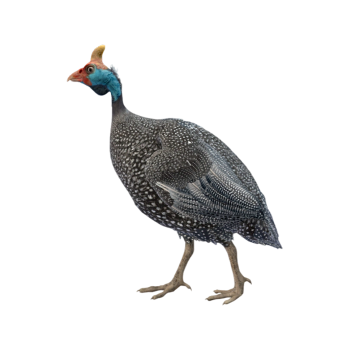
Guinea fowl (3D animated model)
172 View
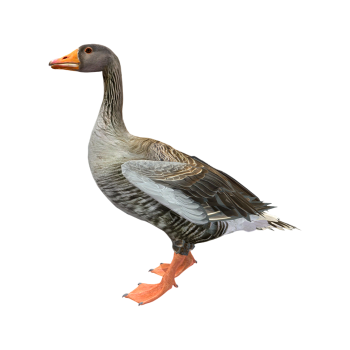
Wild Goose (3D animated model)
194 View

Red Fox (3D animated model)
166 View
Random Model

Adidas Tubular sneaker
774 View

Lithuanian Old Church
898 View



Sandstone
670 View


Bottlenose Dolphin
920 View



Golden Phoenix Butterfly Specimen
1148 View